

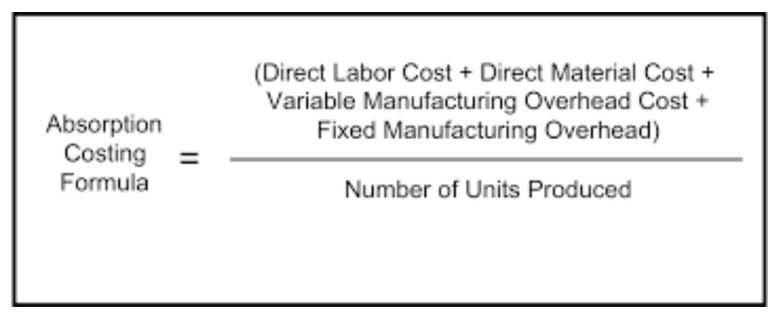
Then, add up the cost of new inventory — this is the cost of raw materials you purchase to manufacture the product. Next, calculate the value of the existing inventory if the manufacturing company already has a stock of materials from a previous period. From the table you can see that direct materials are the integral part and a significant portion of finished goods. It is likely that you will have to estimate the cost of these activities. Next, you will need to allocate the cost of the activities to the individual products. Estimates and allocations based on logical assumptions are better than precise amounts based on faulty assumptions.
- The company has been able to do so by consistently working on improving the efficiency of production and lowering manufacturing costs.
- Estimates and allocations based on logical assumptions are better than precise amounts based on faulty assumptions.
- According to the book Manufacturing Cost Estimating, the benefits of calculating the costs of manufacturing range from guiding investment decisions to cost control.
- Like direct materials, it comprises of a significant portion of total manufacturing cost.
- Cost of goods sold is usually the largest expense on the income statement of a company selling products or goods.
- Manufacturing costs other than direct materials and direct labor are categorized as manufacturing overhead cost (also known as factory overhead costs).
Simplify Billing and Automate Client Invoicing With Clockify
- It encompasses the costs that must be incurred so as to produce marketable inventory.
- From various perspectives, non-manufacturing costs encompass expenses incurred in areas such as administration, marketing, research and development, customer service, and distribution.
- (The depreciation journal entry includes a debit to Depreciation Expense and a credit to Accumulated Depreciation, a contra asset account).
- In the end, management should know whether each product’s selling price is adequate to cover the product’s manufacturing costs, nonmanufacturing costs, and required profit.
- Each of them requires a different set of cost control measures, making appropriate cost categorization even more essential.
- The next step is to calculate the costs of utilities (electricity, water, or gas) that are directly used in the manufacturing process (for example, fuel used to operate the production equipment).
All these costs – marketing and sales expenses, G&A, and R&D – are non-manufacturing overhead costs. These costs aren’t directly related to the physical production of their devices but are essential to running the business and its long-term growth. Nonmanufacturing overhead costs are not included nonmanufacturing costs include in inventory valuation because they are not directly related to producing goods.
What are examples of manufacturing costs?

A project cost overrun happens when the project costs exceed the budget estimate. Though convenient for subscription businesses, recurring billing comes at a cost. Learn how to https://revittemplate.com.br/top-5-trade-credit-insurance-carriers-compared-2/ automate client invoicing with Clockify — track billable hours, create invoices, and get paid faster. Optimize your workforce, take control of inefficiencies, and watch your profits soar with team time tracking software.
Step #3: Add up the other direct expenses
For example, sales commissions and shipping costs for a specific product could be assigned to the product. However, as we noted earlier, managerial accounting information is tailored to meet the needs of the users and need not follow U.S. Nonmanufacturing overhead costs are the business expenses that are outside of a company’s manufacturing operations. In other words, these costs are not part of a manufacturer’s product cost or its production costs (which are direct materials, direct labor, and manufacturing overhead). In the end, management should know whether each product’s selling price is adequate to cover the product’s manufacturing costs, nonmanufacturing costs, and required profit.
Direct Materials
The direct materials would include the metal for the frame, tires, and handlebars. Direct labor would encompass the wages of workers assembling the bicycles. Manufacturing overhead might include the cost of factory utilities, depreciation on manufacturing equipment, and the salaries of factory supervisors. Direct materials should be distinguished from indirect materials (part of overhead costs), about which we will talk later. The systematic allocation of the cost of an asset from the balance sheet to Depreciation Expense on the income statement over the useful life of the asset. (The depreciation journal entry includes a debit to Depreciation Expense and a credit to Accumulated Depreciation, a contra asset account).
Are Nonmanufacturing Overhead Costs Included in Inventory Valuation?
The consulting firm was also able to re-negotiate the manufacturing company’s contracts with poor-performing suppliers. According to the book Manufacturing Cost Estimating, the benefits of calculating the costs of manufacturing range from guiding investment decisions to cost control. As employees use Clockify to clock in and out, employers gain insights into the total number of hours each employee worked on each production line. After manufacturing product X, let’s say the company’s ending inventory (inventory left over) is $500. This article looks at meaning of and differences between two main cost categories for a manufacturing entity – manufacturing cost and non-manufacturing cost. In the Canadian context, companies must adhere to the International Financial Reporting Standards (IFRS) as adopted in Canada, which provide guidelines for cost classification and financial reporting.
- For instance, if the manufacturing costs are too high, these costs can create a dent in the company’s profit.
- As employees use Clockify to clock in and out, employers gain insights into the total number of hours each employee worked on each production line.
- The sales price of each table varies significantly, from $1,000 to more than $30,000.
- Direct materials should be distinguished from indirect materials (part of overhead costs), about which we will talk later.
- According to McKinsey’s research, cutting down manufacturing costs, in addition to boosting productivity, is the key for manufacturing companies to remain competitive.
- These expenses are period costs, meaning they must be expensed in the period in which they are incurred.
Financial accounting treatment
- In fact, you already know that labor costs can spiral out of control if you don’t meticulously monitor them.
- For accounting purposes, nonmanufacturing costs are expensed periodically (typically in the period they are incurred).
- Even though nonmanufacturing overhead costs are not product costs according to GAAP, these expenses (along with product costs and profit) must be covered by the selling prices of a company’s products.
- From the perspective of activity-based costing (ABC), one approach is to identify cost drivers specific to service activities.
- If a company’s stock is publicly traded, earnings per share must appear on the face of the income statement.
Period costs – are not inventoriable and are charged against revenue immediately. Period costs include non-manufacturing costs, i.e. selling expenses and administrative expenses. To help clarify which costs are included in these three categories, let’s look at a furniture company that specializes in building custom wood tables called Custom Furniture Company. Each table is unique and built to customer specifications for use in homes (coffee tables and dining room tables) and offices (boardroom and meeting room tables). The sales price of each table varies bookkeeping significantly, from $1,000 to more than $30,000.
0 Comments